
Unions Fight to Protect Fair Elections as Lawsuit Challenges FLRA Power Shift
A coalition of labor unions has filed a federal lawsuit challenging a controversial policy shift at the Federal Labor Relations Authority (FLRA), arguing that the move could significantly reshape how union elections are conducted for federal employees.
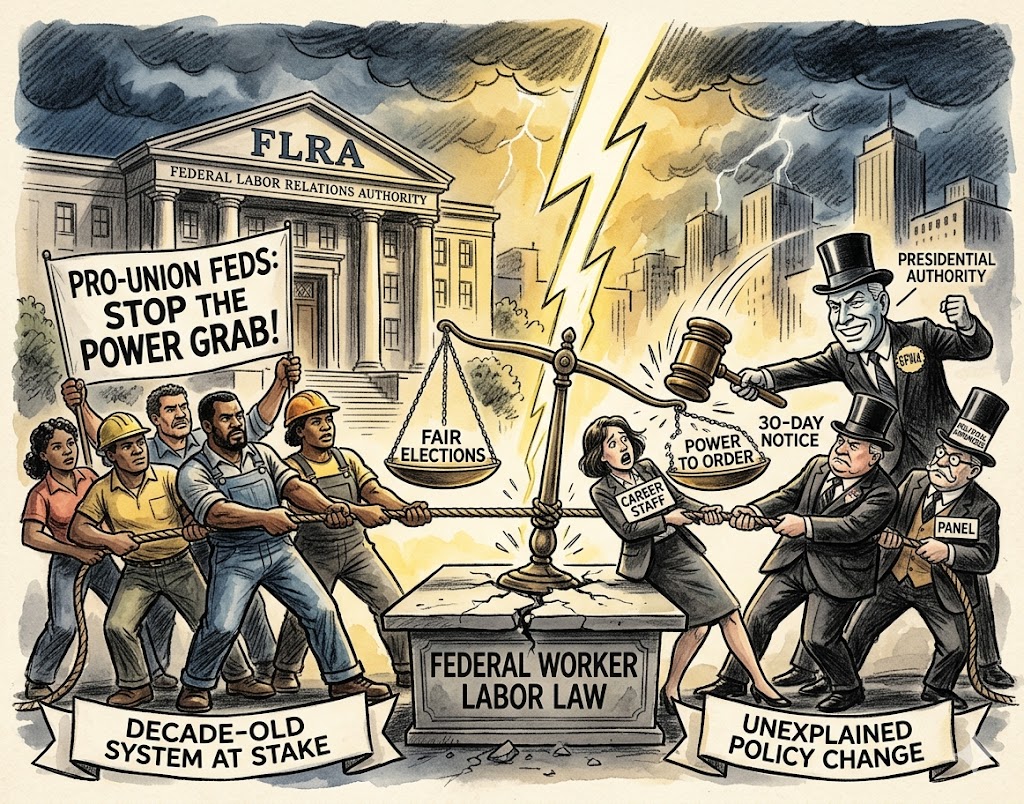
The complaint, filed Wednesday by a labor coalition including AFGE and 7 other unions, targets a recently announced change that would transfer key decision-making authority away from long-standing career staff and place it in the hands of a panel appointed by the president.
At the center of the dispute is who gets to order and oversee union representation elections, an essential mechanism that determines how federal workers organize and collectively bargain.
What’s Changing
For decades, career professionals within the FLRA have been responsible for managing representation cases, including determining when elections should be held. These staff members, often seen as nonpartisan experts, have operated within a system designed to ensure consistency and independence from political influence.
Under the new policy, however, that authority would shift to a politically appointed panel within the agency. Critics argue that this introduces the potential for partisan considerations to play a role in decisions that have traditionally been handled administratively.
The policy is scheduled to take effect on April 23, giving stakeholders just 30 days to prepare for the transition.
Unions Push Back
The unions behind the lawsuit contend that the FLRA failed to provide a sufficient explanation for the abrupt change. In their filing, they argue that the agency did not follow proper administrative procedures and failed to justify why such a significant restructuring is necessary.
They also warn that the shift could destabilize a system that has been built and refined over decades. By removing authority from experienced career staff, the unions claim the policy risks introducing delays, inconsistency, and potential political bias into the election process.
“This is not a minor procedural tweak,” the complaint asserts. “It fundamentally alters how federal employees exercise their rights to organize.”
Broader Implications
The outcome of this case could have far-reaching consequences for federal labor relations. The FLRA plays a central role in overseeing disputes between federal agencies and unions, and its processes are foundational to how federal workers engage in collective bargaining.
If the policy change proceeds, it could set a precedent for greater political involvement in what has traditionally been a more insulated administrative function. On the other hand, if the court blocks the move, it would reinforce the role of career civil servants in maintaining continuity and neutrality within federal labor systems.
What Happens Next
The court will now consider whether to grant an injunction to pause the policy before it takes effect. With the April 23 implementation date looming, the timeline for a decision could be tight.
In the meantime, labor organizations, federal employees, and policymakers will be watching closely. The case underscores an ongoing tension between administrative independence and political oversight, one that continues to shape the landscape of labor relations in the federal government.
Federal Employee union’s have faced strong headwinds from the current administration, and this lawsuit reminds us once again that the fight is far from over. Strengthen your organization today with the powerful suite of digital labor communication tools found in UnionTrack ENGAGE.